 New
New





 4K
4K




What the numbers mean
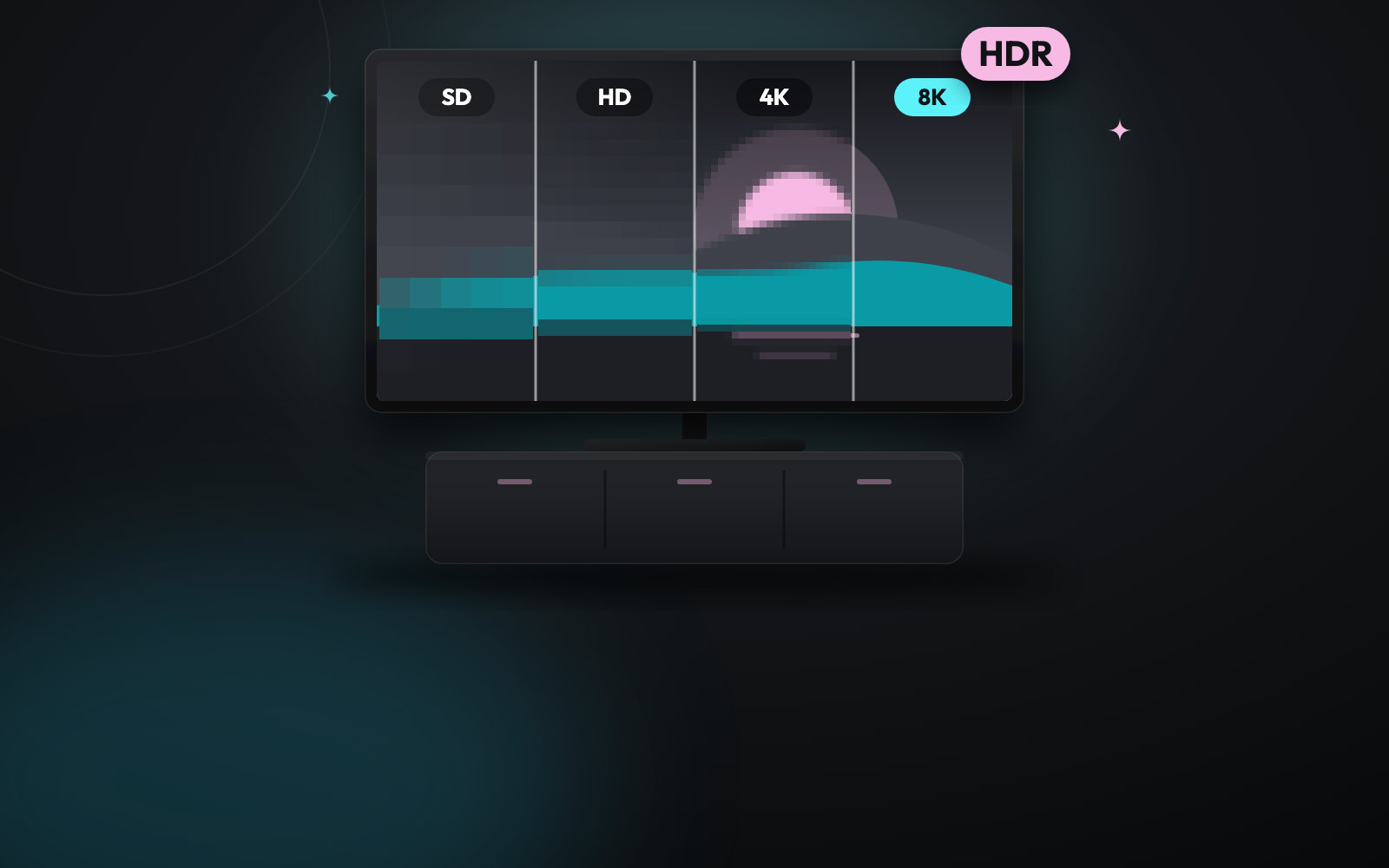
A Full HD picture is made of 1920 by 1080 pixels. 4K has 3840 by 2160, four times as many. 8K goes to 7680 by 4320, four times more again. The more pixels, the finer the detail: blades of grass on a football pitch, hair, the lettering on a shirt.
When you see the difference
You can see the difference between Full HD and 4K from the sofa on a TV of about 50 inches or more. For 8K you need an even larger screen, or you have to sit closer. On a small TV in the bedroom, Full HD is often plenty.
HDR matters at least as much
HDR stands for a wider range between light and dark. A lamp in a dark scene really glows, and details stay visible in the shadows. Many people find HDR a bigger improvement than the step from 4K to 8K.
What your broadband has to manage
You need about 25 Mbps for 4K and 50 Mbps or more for 8K. If several screens watch at once, add the speeds together. Most UK fibre packages manage 4K easily; the Nartiel 8K speed check shows you beforehand what your line can carry.